

The essence of the 2025 China-US tariff war
The core content and implementation background of the US tariff policy
On April 2, 2025, the US government announced the implementation of a "reciprocal tariff" policy on Chinese goods exported to the US. The core measures include:
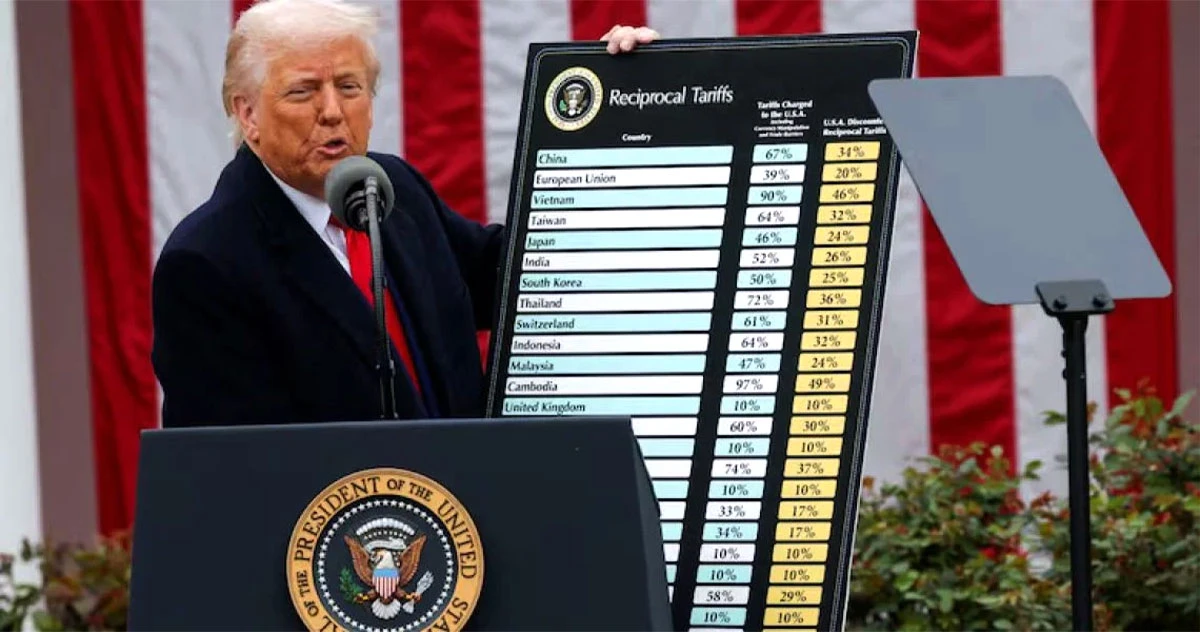
1. A comprehensive 34% tariff increase:
A 34% tariff will be imposed on all imported goods originating from China on the basis of the current tariff rate, effective from April 9. This tariff rate is based on the US assessment of China's trade deficit, as well as China's tariffs and non-tariff barriers to US goods (such as VAT differences).
2. Tariff upgrades on automobiles and parts:
Starting from April 3, a 25% tariff will be imposed on imported automobiles and parts, covering major trading partners such as Japan, Germany, and South Korea. Although China's own brands account for less than 1% of exports to the US, Chinese parts companies' exports to the US exceed US$10 billion, involving key components such as brake systems and suspension systems, which need to be circumvented through transit points such as Mexico.
3. Adjustment of tariffs on small packages:
Starting from May 2, the duty-free treatment of small packages below US$800 imported from mainland China and Hong Kong will be cancelled, and a fixed tax will be imposed on each package (US$25 from May 2 to June 1, and US$50 after June 1). This measure is aimed at combating cross-border e-commerce and is expected to affect China's small-volume trade with the United States by about US$30 billion.
China's countermeasures and strategic response
In response to the US tariff policy, China has taken multi-dimensional countermeasures:
1. Comprehensive and reciprocal tariff increase:
Starting from April 10, a 34% tariff will be imposed on all imported goods originating from the United States, covering agricultural products, energy, automobiles and other fields, directly impacting US exports to China by about US$120 billion.
2. Export control and entity list:
16 US entities including High Point Aerospace Technologies will be included in the export control list, prohibiting the export of dual-use items to them.
11 US companies including Skadio were included in the unreliable entity list, restricting their trade and investment in China.
3. Industrial competitiveness investigation and rare earth control:
Anti-dumping investigations were launched on medical CT tubes originating from the United States and India, involving about US$1.5 billion in trade.
Export controls were imposed on seven types of medium and heavy rare earth-related items, including samarium, gadolinium, terbium, and dysprosium, which directly affected the US high-tech industry.
4.WTO litigation and international cooperation:
China has sued the United States for "reciprocal tariffs" in the WTO, accusing it of violating the principle of non-discrimination and tariff binding obligations. At the same time, it coordinated its position with the European Union, Canada and other countries to jointly oppose unilateralism.
Adjustment of global supply chain and regional layout
1. The strategic position of Mexico's transit hub:
Chinese parts companies need to set up factories in Mexico and meet the USMCA rules of origin (75% North American value ratio) to enjoy tax-free treatment. For example, BYD plans to build a factory in Mexico with a production capacity of 150,000 vehicles, and circumvent tariffs through localized production.
Mexico's own tariff policy adjustments (such as a 25% tariff on steel, aluminum, and auto parts in 2023) have increased China's export costs to Mexico, but it is still the best springboard for the North American market.
2. Capacity transfer between Southeast Asia and Europe:
Chinese automakers have built factories in Thailand, Hungary and other places, such as GAC Aion's Thailand factory and BYD's Hungary factory, to circumvent EU anti-subsidy duties (36.3%) and US tariffs through localized production.
Southeast Asian countries such as Vietnam and Indonesia have become transfer destinations for industries such as textiles and electronics, but the United States has imposed a 46% tariff on Vietnam and a 32% tariff on Indonesia, weakening its cost advantage.
3. Long-term challenges of supply chain reconstruction:
The United States promotes "Friendshoring" and requires the supply chain to be transferred to allies such as North America and Europe, but Mexico's labor costs are only 1/5 of those in the United States, and it is still the best choice.
Chinese companies need to resolve tariff pressure through technology upgrades (such as BYD's blade battery) and market diversification (such as Russia, the Middle East, and Latin America).
Industry impact and corporate response strategies
1. Automotive industry:
China's own brands have limited direct impact on exports to the United States, but parts companies need to increase their localization rate in Mexico. For example, CATL plans to build a factory in Mexico to supply Tesla's North American factory.
Japanese and German automakers are more affected. In 2024, Japan exported 1.37 million vehicles to the United States. A 25% tariff will increase the cost of each vehicle by $8,000-9,000, and sales are expected to decrease by 600,000-650,000 vehicles.
2. Electronics and machinery industry:
The United States has imposed a 50% tariff on semiconductors, computer chips, etc., forcing China to accelerate domestic substitution. Companies such as SMIC and Huawei have increased their R&D investment, and the semiconductor self-sufficiency rate target has been raised to 30% in 2025.
3. Agriculture and consumer goods:
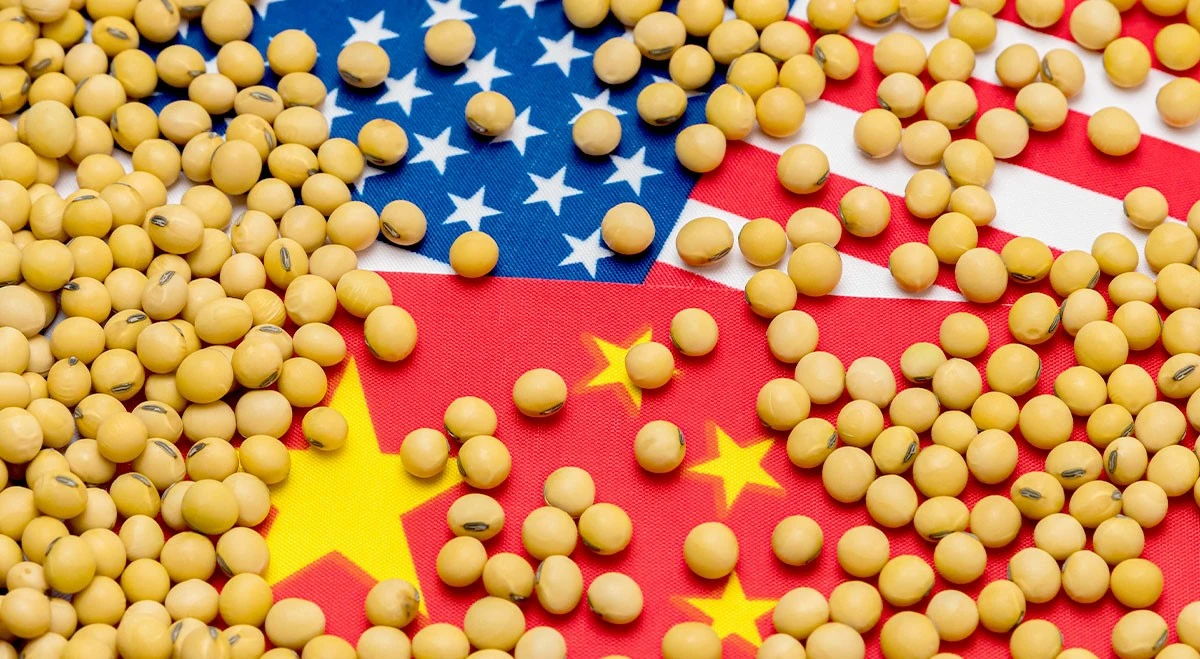
U.S. agricultural products (soybeans, corn) exports to China fell by 34%, and China turned to suppliers such as Brazil and Argentina. In 2025, South American soybean imports are expected to account for 65%.
The adjustment of tariffs on small packages affects cross-border e-commerce. Platforms such as Shein and Temu are accelerating the layout of overseas warehouses in Mexico and Canada to shorten the logistics chain.
International response and multilateral mechanism challenges
1. Ally counterattack and WTO deadlock:
Canada imposes a 25% tariff on U.S. cars, the EU considers taxing digital services, and Japan and South Korea request exemptions.
The WTO dispute settlement mechanism is still paralyzed due to obstruction by the United States. China has launched a reform initiative with the EU, Brazil, etc., but it is difficult to see results in the short term.
2. Reconstruction of global trade rules:
The United States reshapes unilateralism rules through "reciprocal tariffs" and challenges the WTO's most-favored-nation treatment principle. China relies on RCEP and the "Belt and Road" to promote regional cooperation. In 2025, the trade share of RCEP member countries is expected to reach 35%.
Transit countries such as Mexico and Vietnam face the pressure of "taking sides" and need to balance their interests in the Sino-US supply chain.
Long-term trends and potential risks
1. Accelerated technological decoupling:
The United States continues to increase export controls on China's semiconductors, artificial intelligence and other fields, and China's "independent and controllable" strategic investment increases. The target for R&D expenditure to account for GDP in 2025 is 2.8%.
2. Risk of inflation and economic recession:
US tariffs have led to rising prices of imported goods. In 2025, core PCE inflation may rise to 3.5%. The Fed's interest rate hike cycle is extended, and global economic growth may slow to 2.3%.
However, some professionals believe that the purpose of this round of US tariffs is not for the so-called "manufacturing return", but for the "smoke bomb" released by the Fed's interest rate cut. Personal opinions are for reference only.
Summary
The US tariffs on China in 2025 are a major impact of unilateralism on the multilateral trading system, which will intensify the reconstruction of the global supply chain and economic fluctuations in the short term. China responds to challenges through countermeasures, regional layout and technological upgrading, but in the long run, it needs to seek a balance between WTO reform, RCEP deepening and the high-quality development of the "Belt and Road". The global trade pattern is shifting from "rule competition" to "camp confrontation", and companies need to build a resilient supply chain in uncertainty.