

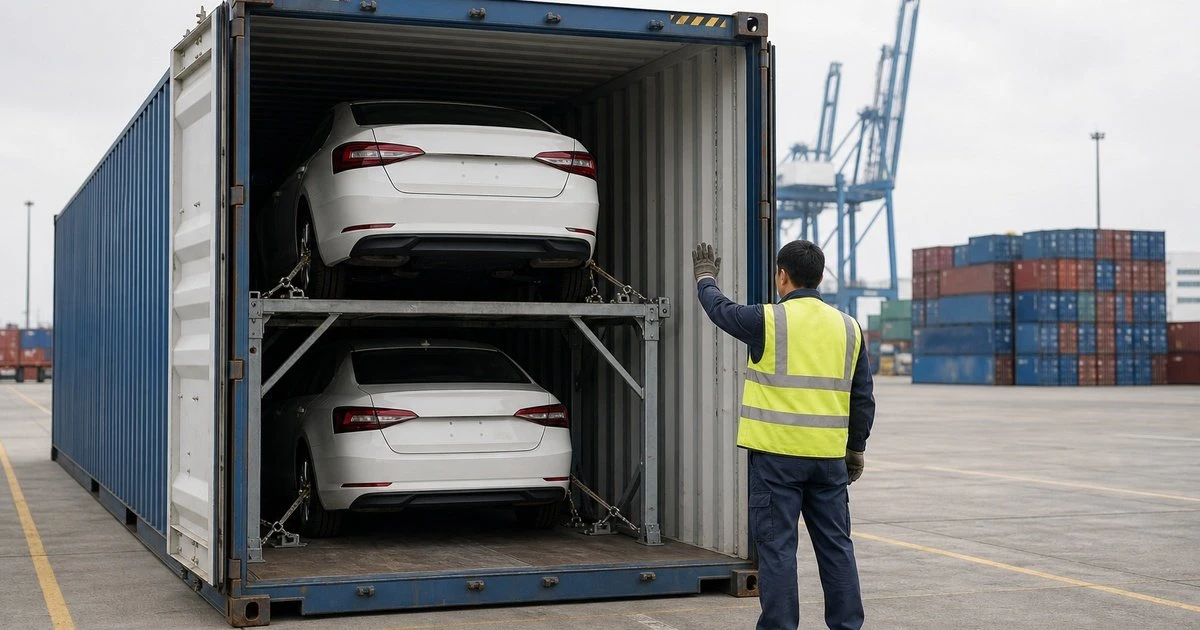
How Many Cars Fit in a Container?
Buyers ask this early, and usually expect a fixed number. There isn't one. The figure that matters is how much of the container's volume your cars actually occupy once they are strapped down, because freight is priced by the box, not by the unit.
The working answer, and why it stays approximate
A 40-foot high-cube takes two cars as standard practice, one behind the other on the floor. A 20-foot container takes one. Add a steel rack and compact models can go two-high, which pushes a 40-foot box to three or four units. The rack is not free capacity, however: it consumes height, adds lashing points to inspect, and only pays off when the cars are small enough to leave clearance.
What decides the real count
Overall length and height of each unit, including roof rails and spoilers.
Whether a rack is used, and the clearance it leaves above the lower car.
Door opening height at the loading ramp, which can be tighter than the container interior.
Access for lashing: wheels must be reachable and strapped to the floor or rack, not the body.
Battery or fuel status where the unit is electric, which the dangerous-goods rules constrain.
Consolidation: what you gain, what you risk
Most first orders do not fill a container, so the box is shared between buyers. Consolidation lowers the freight share per unit and makes small orders possible at all. It also creates dependencies: if one buyer's documents are late, the container waits, and everyone's schedule moves. Damage claims become harder to attribute when several parties inspected the same box. If you consolidate, agree in writing who inspects at loading, who holds the photographs, and in what order the units are unloaded at destination.
Loading day: what to check before the doors close
Photograph each car at four corners after lashing, with the straps visible. Confirm the doors close without contact, that nothing rests on body panels, and that the ramp angle did not scrape a bumper on the way in. These images are the only evidence you will have if a claim arises, which is the same logic behind the inspection file we ask for before shipment.
What this changes for your landed cost
Freight is one line, but loading decisions move other lines. A rack adds handling and inspection time. A consolidated box spreads freight across two or three buyers, yet ties your delivery to theirs. Shipping from a pickup point rather than the factory gate changes the inland leg before the container is even sealed, which we covered in the four-gateway comparison.
When a car will not fit at all
Some units simply do not containerise. Overheight vans, long-wheelbase pickups and anything with roof equipment can exceed the door opening, and the answer is then a flat-rack or a roll-on/roll-off sailing. Both change the booking window and the insurance basis, so the decision belongs in the quotation stage, not at the ramp with the car already running.
Summary
Two cars per 40-foot high-cube is the baseline; three or four compact units is possible with a rack; one per 20-foot. Treat the number as a planning assumption until you know the models, then confirm it against measured dimensions rather than the brochure.
Company Name: Jingsun Car Co., Ltd
Website: https://www.sin-auto.com/?url=jingsuncar.com
Service Countries: Ghana / Algeria / Cambodia / Middle East / East Africa (Years of practical experience, familiar with customs clearance rules of various countries)