

GAC Toyota FRONTLANDER VS FAW-Volkswagen T-ROC
When it comes to choosing between two amazing vehicles, such as the FRONTLANDER and T-ROC, it can be a difficult decision. Both vehicles are packed with incredible features and designs that make them stand out on the road, so we have compiled a list of comparisons to help make this decision a bit easier.
What Would You Choose?
GAC Toyota FRONTLANDER (hereinafter referred to as FRONTLANDER) and FAW-Volkswagen T-ROC (hereinafter referred to as T-ROC) are both joint venture compact SUVs. They not only have the same positioning, but also have a certain overlap in price. In this situation, what would you choose?
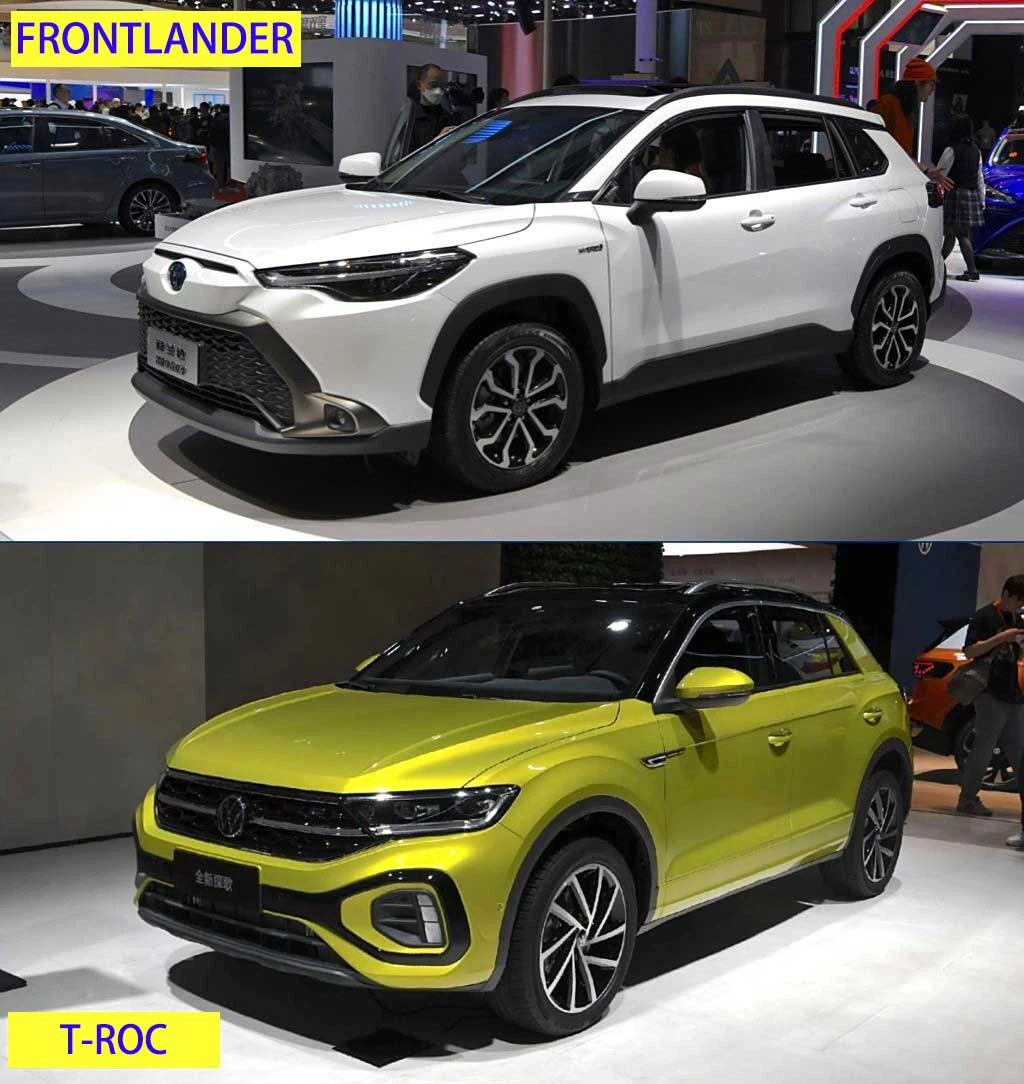
Front Face Style
Both FRONTLANDER and T-ROC adopt their own family design styles. The former has a more aggressive visual effect due to its "big mouth". The latter is quite standard, but since it is a facelift model, the front grille and headlights have become connected, so it looks more fresh.
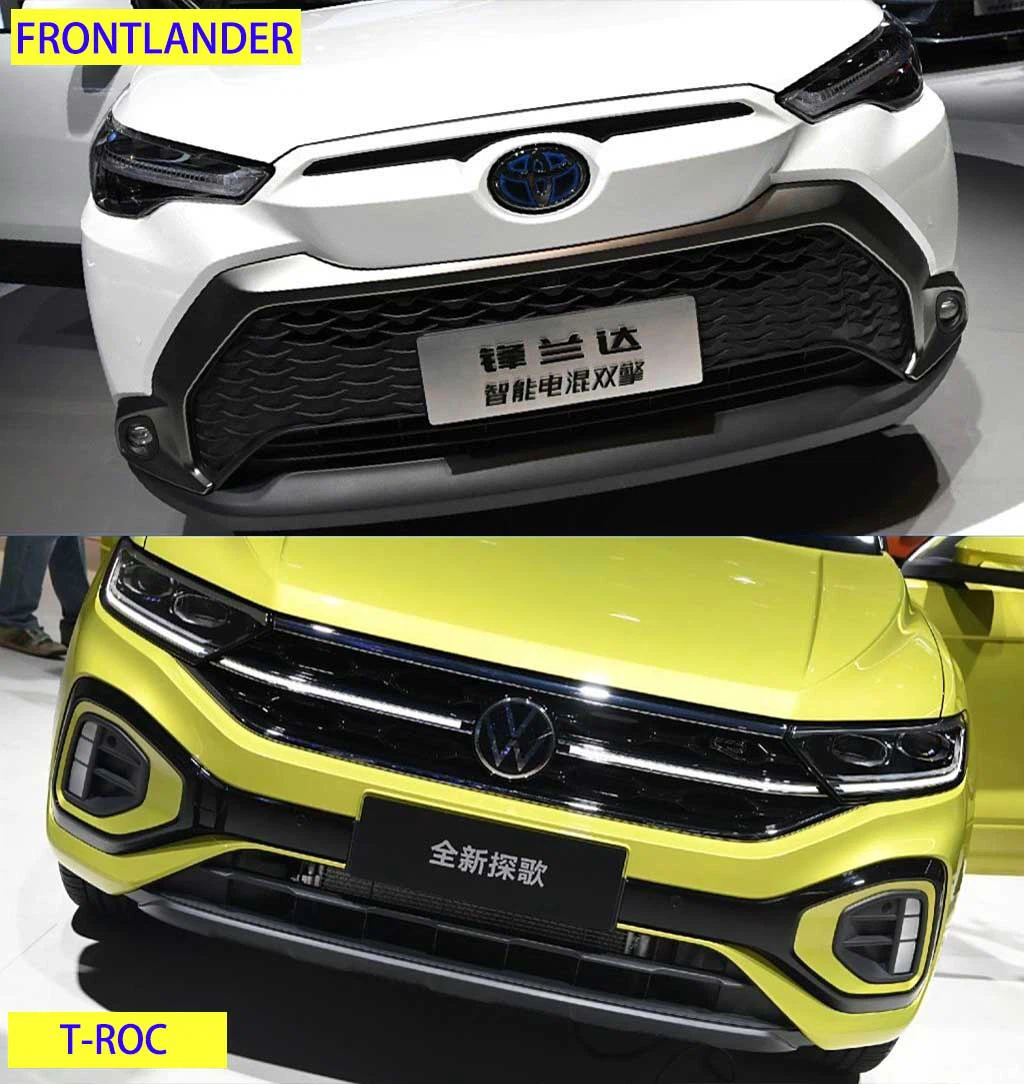
LED Light
Except for the FRONTLANDER Elite/Leader Edition, all models of the two cars are equipped with LED light sources and automatic headlight functions. In addition, the T-ROC mid-range/high-end models have a light strip inside the grille that forms a through-type shape with the daytime running lights.

Front Bumper
FRONTLANDER's front bumper is obviously wilder than T-ROC's, and the matte texture makes it look more premium. In terms of configuration, FRONTLANDER does not provide front parking radar, while T-ROC only provides it in mid-range and high-end models.

Body Side
From the side, both FRONTLANDER and T-ROC have harmonious proportions. As for the body size, FRONTLANDER has an overall advantage in length, width and height, but the wheelbase, which is related to the riding space, is 40mm shorter, only 2640mm.

Wheels
The wheel sizes of both models are not particularly exaggerated, with the smallest being 17 inches and the largest being 18 inches, taking into account both aesthetics and practicality. In addition, the entire T-ROC series only provides a tire pressure alarm function, while the FRONTLANDER has a tire pressure display.

Tail Style
The tail styles of both models are quite simple. Relatively speaking, T-ROC is more fashionable, while FRONTLANDER feels a bit bland.

Taillight Shape
For the taillight part, T-ROC adopts the popular through-type taillight shape, which looks very delicate when lit. The performance of FRONTLANDER is obviously much worse.

Interior Style
Sitting in the car, the interiors of FRONTLANDER and T-ROC are still adjusted on the basis of maintaining the family style. The lines of the FRONTLANDER center console are more flexible and youthful than those of T-ROC, while the latter is a standard Volkswagen style, which is quite standard.

Front Row Space
After a 170cm tall tester sat in the front row and took a suitable driving posture, the FRONTLANDER had a slight advantage in headroom.

Rear Space
The wheelbase disadvantage makes the rear legroom of FRONTLANDER significantly inferior, and the headroom is not as ample as that of T-ROC.

Middle Size Of The Rear Seats
The comfort of the middle position of the rear seats of both cars is not very satisfactory, after all, the size is limited.

Power Options
In terms of power, T-ROC offers two engines, 1.4T/1.5T, for consumers to choose from, while FRONTLANDER has 2.0L fuel/2.0L hybrid models to choose from.

Transmission
For transmission, FRONTLANDER is equipped with CVT or E-CVT transmission, while T-ROC is equipped with the familiar 7-speed dual-clutch transmission.

Suspension Structure
FRONTLANDER suspension structure
Front: McPherson independent suspension
Rear: Torsion beam non-independent suspension
T-ROC suspension structure
Front: McPherson independent suspension
Rear: Multi-link independent suspension
